| |
| |
| |
| |
| |
Wisdom Tooth Surgery

The wisdom tooth, or third molar, is the last tooth of the permanent dentition and usually erupts naturally between the ages of 17-23.
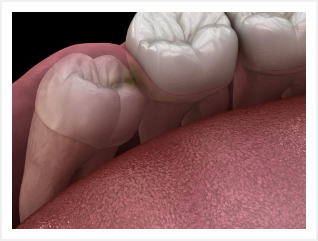
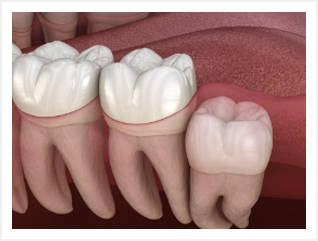
Often, due to lack of space, the wisdom tooth cannot emerge in the oral cavity and remains impacted within the jaw. |
| |
|
| |
| |
| |
|
|
| |
| |
| |

Why does a wisdom tooth cause pain?
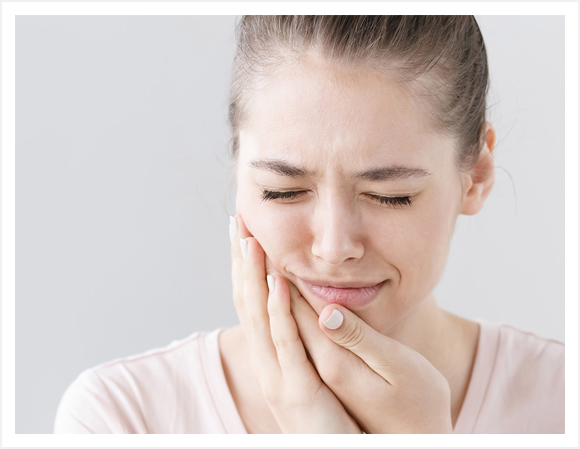
When the wisdom tooth is in a difficult position in the mouth, it is almost impossible to brush it properly, allowing bacteria to develop. This can lead to pericoronitis, which manifests as pain, swelling, bad breath, difficulty swallowing, and limited mouth opening. |
| |
| |
| Problems caused by a wisdom tooth: |
 Pain, trismus, swelling, and even fever can occur due to inflammation around a partially erupted impacted tooth. Pain, trismus, swelling, and even fever can occur due to inflammation around a partially erupted impacted tooth. |
| It can push adjacent teeth, risking misalignment (crowding). |
| It can cause cavities because food tends to accumulate. |
| A cyst may develop in the area of the impacted tooth, damaging the lower jaw and surrounding bone. |
| Why should you remove a wisdom tooth? |
| For orthodontic reasons. |
| To reduce the risk of decay in neighboring teeth. |
| To avoid pericoronitis and periodontal disease, which could affect the gums and bone. |
|
|
| |
|
|
| |
| |
CONTACT US
to book your appointment and be sure that you will receive high-quality services and a friendly and pleasant experience. |
|
| |
| |
| |